What to Ask Before Your Parent Is Discharged from the Hospital
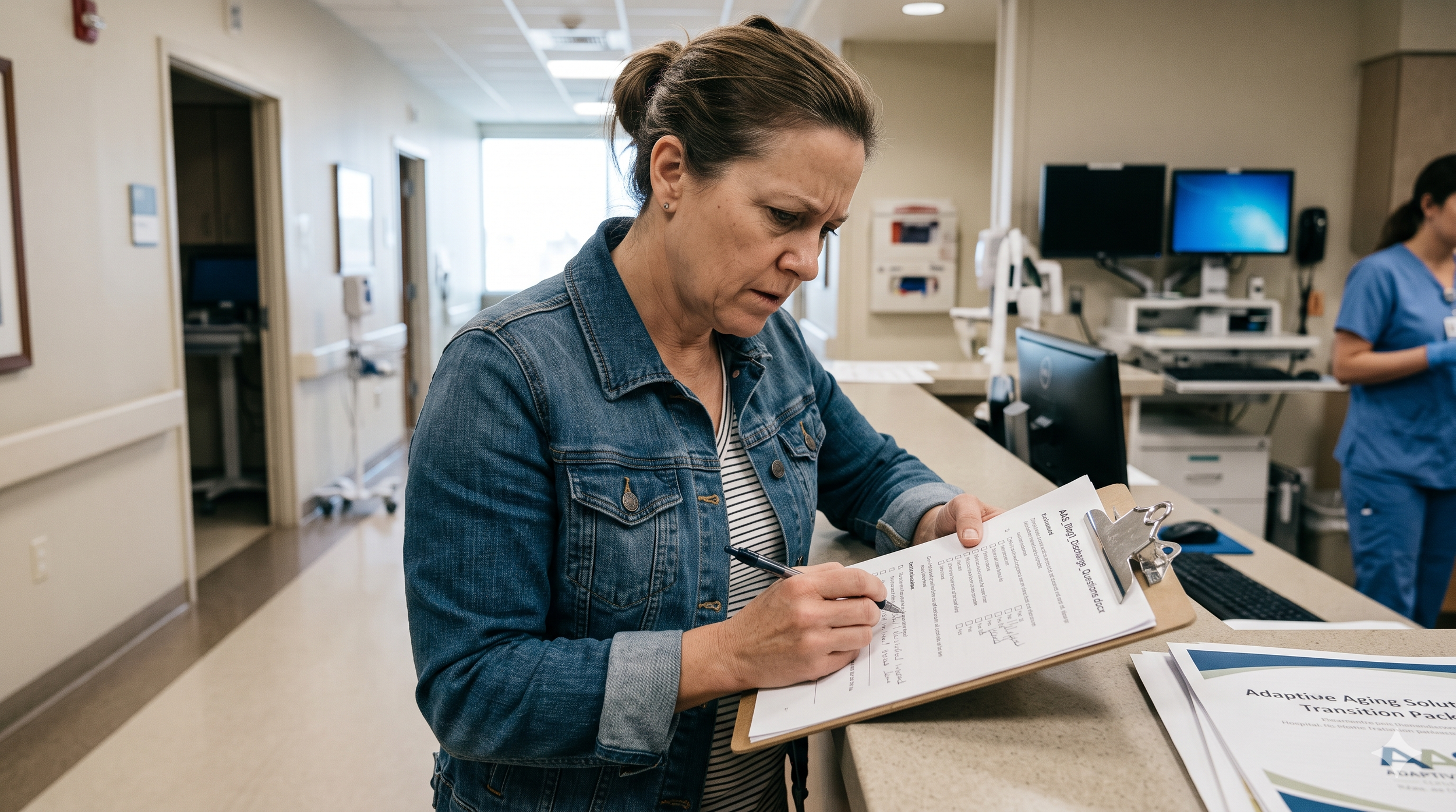
You didn’t expect the call today. But here it is — “We’re planning to discharge your mom tomorrow.” And just like that, you have less than 24 hours to figure out how to bring home someone who just needed a hospital stay in the first place.
Most families leave that conversation in a fog. They’re handed a folder of papers, given instructions they can barely absorb, and sent home to figure out the rest. If that’s where you are right now — or if you’re trying to get ahead of it — this post is for you.
Why Discharge Day Is One of the Most Dangerous Moments in Recovery
Most people think the hard part is the hospital stay. The harder part, clinically, is often what happens in the first 72 hours after discharge. According to the National Institute on Aging, roughly one in five Medicare patients is readmitted to the hospital within 30 days of discharge — and many of those readmissions are preventable.
They happen because something fell through the cracks at the handoff. A medication change no one explained. A follow-up appointment no one scheduled. A home that wasn’t ready for what that person now needed.
Hospital discharge planning refers to the process of preparing a patient to safely leave an inpatient setting and continue recovery at home or in another care setting. In practice it is often rushed, often incomplete, and almost always handed to a family that hasn’t been given a roadmap.
You have the right to ask questions. You have the right to slow this down. Asking the right things before you leave the building is what makes the difference.
Ask These Questions Before Anyone Starts Packing
Start here — before logistics, before the car, before anything else.
1. Is this discharge medically driven, or is it being driven by insurance authorization running out?
2. What are the specific reasons my loved one is ready to leave now versus two more days?
3. What level of physical assistance will they need at home — and is that realistic given who will actually be there?
4. Are there any restrictions I need to know about — stairs, weight-bearing, driving, lifting?
5. What are the warning signs that mean we need to come back to the emergency room?
⚠️ That last question is the one families almost never think to ask, and it’s the one that prevents a terrifying 2 a.m. guessing game. Get a clear answer. Write it down.
Questions to Ask About Medications
Medication errors at discharge are one of the most consistent causes of complications and readmissions in older adults. This isn’t about being difficult — it’s about making sure nothing gets missed in the handoff.
6. What medications are being sent home, and have any of them changed during this stay?
7. Has someone done a full medication reconciliation — comparing what they were taking before admission with what’s being prescribed now?
8. Were any medications stopped during the hospital stay? Should they be restarted at home — or not?
9. What side effects should we watch for in the first week, especially from anything new?
10. Can I get a written list with the name, dose, timing, and purpose of every medication?
That written list is something you can bring to every follow-up appointment, post on the fridge, and hand to anyone sharing in care. If your family doesn’t have a system for tracking medications yet, the Caregiver Quick Start Toolkit has a ready-to-fill medication tracker — it takes about five minutes and keeps everyone on the same page.
Questions to Ask About What Comes Next
This is where real gaps show up. Families often leave the hospital with no scheduled appointments, no confirmed referrals, and no clear sense of what Monday morning is supposed to look like.
11. What follow-up appointments are needed, with which providers, and in what timeframe?
12. Has someone actually scheduled those appointments — or is that our responsibility?
13. Has a referral been placed for home health services — nursing, physical therapy, occupational therapy, or speech therapy?
14. If home health was ordered, how long should it continue, and who do we call if no one shows up?
15. If outpatient therapy was recommended, where do we go and when should it start?
The window right after hospitalization is when therapy has the greatest impact on long-term recovery. Missing it — because a referral got lost or nobody followed up — has real consequences. Don’t assume it’s been handled. Confirm it before you leave.
What Families Get Wrong at Discharge
Trusting “the social worker will handle it” without verifying.
Hospital social workers are often managing many patients at once. They are doing their best. But confirming that every piece of the plan is actually in place before discharge is still your job. Follow up on referrals yourself.
Leaving without the discharge summary in writing.
You are entitled to this document. It contains the diagnosis, treatment summary, medication changes, and follow-up instructions in one place. Ask for it before you leave. If it isn’t ready, get the nurse’s written instructions and the name and direct number for who to call with questions.
Assuming the home is ready.
A hospitalization often changes what a person can physically do — sometimes significantly. Walk through the home in your mind before they arrive. Can they get up the front steps? Reach the bathroom safely? Get in and out of bed? What looked fine three weeks ago may not work now.
Not asking about equipment.
Has a walker, shower chair, hospital bed, or wheelchair been ordered? Is insurance covering it? Is it being delivered — or does someone need to pick it up? This detail falls through the cracks more often than it should.
When You Need More Help Navigating a Discharge
If you’re in this moment right now — a discharge call came, you have 48 hours, and you don’t know where to start — that’s exactly what the Hospital-to-Home Transition Session at Adaptive Aging Solutions is for.
It’s a 45-minute virtual educational consultation where we work through your family’s specific situation: what to ask the hospital team, what to have ready at home, what Medicare may cover, what equipment matters, and how to approach the first week. You’ll leave with a written action plan. This is educational guidance — not medical advice or clinical services. Available nationwide. Book at adaptiveaging.solutions.
Frequently Asked Questions About Hospital Discharge Planning
What should I do when my parent is being discharged from the hospital?
Start by asking questions before agreeing to a discharge timeline. Find out what level of care is needed at home, what medications have changed, what follow-up appointments are required, and what equipment is being sent home. Ask for everything in writing and confirm that any home health or therapy referrals have actually been placed — not just promised.
Can I refuse a hospital discharge if I don’t think it’s safe?
Yes. You have the right to request a review and to speak with a patient advocate if you believe the discharge is premature or unsafe. Raise your specific concerns clearly — “I don’t know how to manage the wound care” and “the home isn’t accessible” are both legitimate concerns that warrant a real response.
What does a discharge planner do?
A hospital discharge planner — usually a social worker or nurse case manager — helps coordinate the transition from hospital to home or another care setting. They arrange home health referrals, equipment, and follow-up services. They are managing multiple patients at once, so confirming that each piece of your parent’s plan is actually in place is worth the extra step.
What does Medicare cover when my parent comes home from the hospital?
Medicare Part A covers short-term skilled home health services — nursing and therapy — following a qualifying inpatient hospital stay, when specific homebound and skilled care criteria are met. It does not cover ongoing personal care, homemaker services, or assisted living. Understanding the actual coverage picture before discharge saves significant stress later.
What are the most important questions to ask before hospital discharge?
Focus on five areas: warning signs that mean a return to the ER is needed; what medications have changed and what to watch for; what follow-up appointments are needed and whether they’ve been scheduled; what home health or therapy referrals have been placed; and what equipment has been ordered and how it’s being delivered.
You Don’t Have to Figure This Out on Your Own
Nobody is expected to know all of this instinctively. The families who come through a discharge well aren’t the ones who had it figured out — they’re the ones who asked questions, wrote things down, and didn’t leave the building until they had answers.
Bring this list. Ask every question on it. Get everything in writing. And if you want someone knowledgeable in your corner as you navigate it, we’re here.
Educational Disclaimer: This content is for general educational purposes only. It does not constitute medical advice, clinical guidance, or professional healthcare services. Hospital-to-Home Transition Sessions and Home Safety Strategy Sessions provided through Adaptive Aging Solutions are educational consultations only — not occupational therapy or medical services. For clinical questions specific to your loved one’s situation, please consult their healthcare team.
